If your only experience with teeth whitening was a box of strips from a drugstore or a one-size-fits-all tray from years ago, your expectations of what whitening can actually achieve might be based on outdated information. The results you got then- modest at best, patchy in places, fading within weeks- bear very little resemblance to what modern professional whitening can deliver today.
Table of Contents
- The Problem With Older Whitening Methods
- Custom Fitted Trays and Precise Gel Application
- LED and Light Activated Whitening Technology
- Desensitizing Agents Built Into Modern Formulas
- Combination Whitening Approaches
- How Long Modern Whitening Results Last
- Who Benefits Most From Modern Whitening Technology
- FAQs
- Ready for a Noticeably Brighter Smile?
Teeth whitening technology has advanced significantly over the last decade. The active ingredients are more refined, the delivery systems are more precise, and the overall experience is more comfortable and more predictable than it used to be. Patients who tried whitening years ago and gave up are often genuinely surprised by what’s possible when they revisit the option with a professional.
Patients exploring a Teeth Whitening service in Agoura Hills today are working with technology and techniques that are in a completely different category from what was available even five to ten years ago. Understanding what has changed helps set realistic expectations and makes it easier to see why professional treatment produces results that at-home products simply can’t match.
The Problem With Older Whitening Methods
To appreciate how far things have come, it helps to understand what made older whitening methods fall short. Traditional over-the-counter strips were made from a thin flexible material coated in a low concentration peroxide gel. They were designed to fit a generic tooth shape, which meant uneven contact with the tooth surface and inconsistent results across the smile.
The peroxide concentrations in these products were kept low for safety reasons, which meant patients had to use them repeatedly over weeks to see any noticeable change. Results were often subtle, rarely dramatic, and faded quickly once treatment stopped because the underlying stain molecules weren’t fully broken down.
Older in-office whitening methods were more effective but came with their own drawbacks. High concentration bleaching agents applied without precise control led to significant sensitivity during and after treatment. Some patients found the experience uncomfortable enough that they avoided whitening altogether after a single bad experience.
Custom Fitted Trays and Precise Gel Application
One of the most meaningful advances in professional whitening has been the move to custom fitted trays made from a precise mold of the patient’s teeth. Unlike generic strips or one-size trays, a custom tray fits the exact contours of each individual tooth, ensuring the whitening gel makes consistent contact across the entire surface.
This precision matters more than most people realize. Even coverage means even results. There are no patchy areas, no missed spots near the gum line, and no gel pooling in areas where it doesn’t belong. The result is a noticeably more uniform shade improvement across the full smile.
Custom trays also allow patients to use a more appropriate concentration of whitening gel at home under professional supervision, getting better results than anything available over the counter while keeping the process safe and controlled.
LED and Light Activated Whitening Technology
In-office whitening has been transformed by the introduction of LED and light activated systems that work alongside the whitening gel to accelerate and enhance the bleaching process. The light activates the peroxide in the gel, speeding up the chemical reaction that breaks down stain molecules inside the tooth.
The result is a significantly faster treatment with more dramatic shade improvement in a single appointment than was previously possible. Patients who need results quickly, before a wedding, an event, or simply because they don’t want to wait weeks, now have a realistic option for achieving noticeable whitening in a single visit. Modern LED teeth whitening treatment systems have also been refined to minimize heat and sensitivity, which were common complaints with older light activated systems. The technology has become both more effective and more comfortable at the same time.
Desensitizing Agents Built Into Modern Formulas
Sensitivity after whitening was one of the biggest barriers that stopped patients from pursuing treatment or continuing it once they started. Modern professional whitening formulas have addressed this directly by incorporating desensitizing agents like potassium nitrate and fluoride into the gel itself.
These ingredients work alongside the whitening agent to calm the nerve response in the teeth during and after treatment. The result is a significantly more comfortable experience for most patients, including many who previously considered themselves too sensitive for whitening.
Professional whitening providers also typically recommend a remineralizing gel or sensitivity relief treatment to use alongside the whitening process, providing an additional layer of protection for patients with naturally sensitive teeth.
Combination Whitening Approaches
Another development that has changed what whitening can achieve is the growing use of combination approaches that pair in-office treatment with customized at-home maintenance. Rather than treating these as separate options, modern providers use them together for results that are more dramatic initially and longer lasting over time.
A patient might start with an in-office LED whitening session that delivers immediate visible results, then continue with custom tray whitening at home using a professional grade gel to maintain and enhance those results over the following weeks. This combination approach produces outcomes that neither method alone could achieve.
Here is how modern professional whitening compares to older options:
- Custom trays – precise fit for even coverage vs. generic strips with patchy contact
- LED activation – faster, more dramatic results in a single visit vs. weeks of repeated strip use
- Built-in desensitizers – significantly more comfortable vs. older high concentration gels that caused lasting sensitivity
- Professional grade gel – higher concentration with controlled application vs. low concentration OTC products
- Combination approach – in-office plus at-home for lasting results vs. one-off treatments that faded quickly

Agoura Advanced Dentistry serves patients across Agoura Hills, Calabasas, Westlake Village, Thousand Oaks, Oak Park, and Malibu. Call or visit the website to book your teeth whitening consultation today.
How Long Modern Whitening Results Last
One of the most common frustrations with older whitening methods was how quickly results faded. Modern professional whitening produces deeper, more thorough stain removal, which means results last significantly longer when patients follow basic maintenance habits.
With professional teeth bleaching and proper aftercare, most patients maintain noticeably whiter teeth for one to three years before a touch-up is needed. Patients who avoid heavily staining foods and drinks, brush regularly, and use a maintenance tray occasionally can extend results even further.
This longevity represents a significant improvement over older methods, where results often faded back to the original shade within a few months regardless of how carefully patients maintained their routine.
Who Benefits Most From Modern Whitening Technology
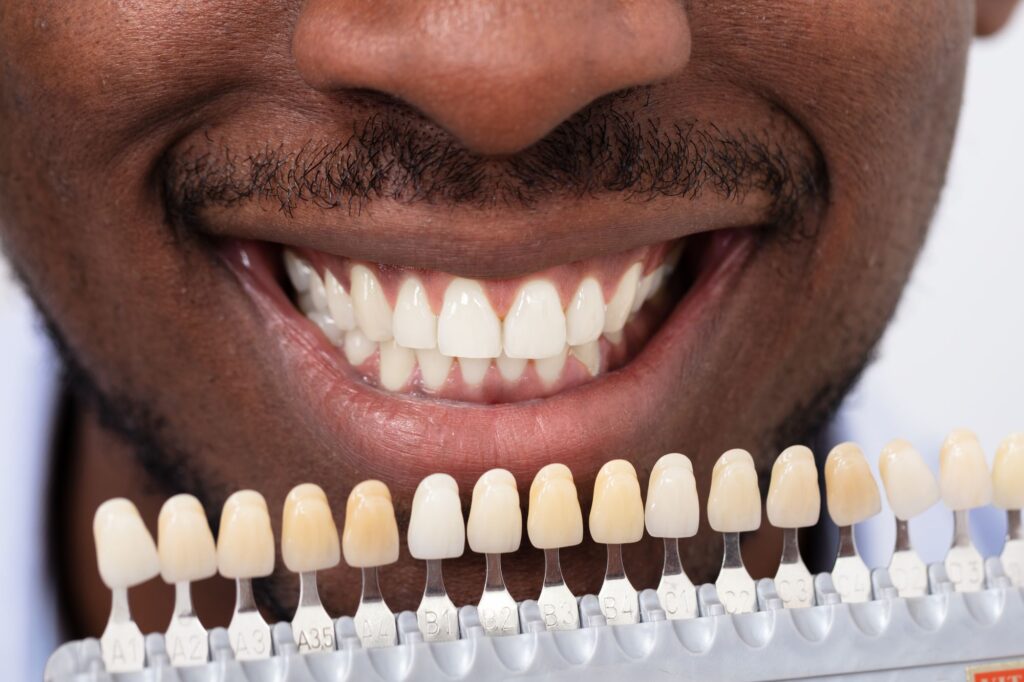
Modern professional whitening works best for patients with extrinsic staining, the kind caused by coffee, tea, wine, tobacco, and general aging of the enamel. These are the most common types of staining and the ones that respond most predictably to peroxide based whitening.
Patients with intrinsic staining, caused by certain medications, fluorosis, or trauma to the tooth, may find that whitening produces more limited results. In these cases, alternative cosmetic treatments like veneers or bonding may be a more effective path to a brighter smile. A consultation with a professional helps identify which type of staining you have and sets realistic expectations before treatment begins.
FAQs
How white can my teeth get with professional whitening?
Results vary depending on the current shade of your teeth and the type of staining present. Most patients achieve several shades whiter with professional treatment, though individual results differ.
Is modern teeth whitening safe for sensitive teeth?
Yes, for most patients. Modern formulas include desensitizing agents that significantly reduce sensitivity. A consultation helps identify the right approach for your specific level of sensitivity.
How long does an in-office whitening appointment take?
Most in-office whitening appointments take between 60 and 90 minutes, including preparation, the whitening treatment itself, and aftercare instructions.
How often do I need to whiten my teeth?
With proper maintenance, most patients need a touch-up every one to two years. Patients who consume a lot of staining foods and drinks may need more frequent maintenance.
Can whitening change the color of crowns or veneers?
No. Whitening agents only work on natural tooth structure. Crowns, veneers, and bonding won’t change color with whitening treatment, which is worth discussing with your dentist before starting.
Ready for a Noticeably Brighter Smile?
Modern teeth whitening technology has made it easier than ever to achieve dramatic, lasting results safely and comfortably. If you’ve tried whitening before and been disappointed, or if you’ve been putting it off because of sensitivity concerns, now is a great time to find out what’s actually possible.