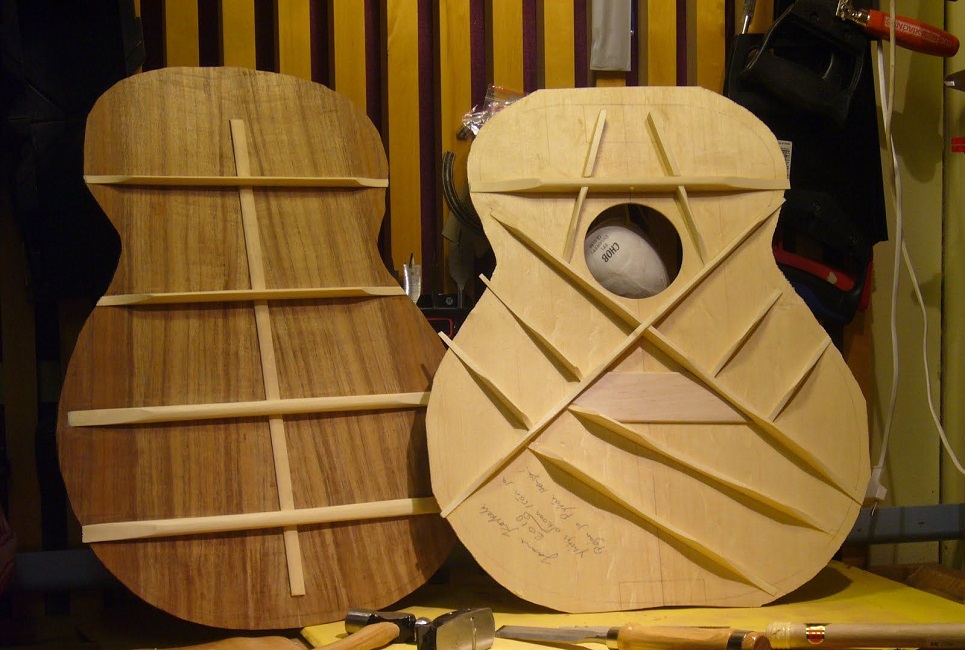
When it comes to crafting the perfect acoustic guitar, every element counts, from the top wood to the binding, and even the bracing inside the guitar body. One of the most crucial aspects of a guitar’s construction is its bracing, which influences the sound, tone, and resonance of the instrument. The choice of acoustic guitar bracing wood can dramatically affect the final sound, which is why it’s important to understand the different types available and how they impact the tone.
Table of Contents
What is Acoustic Guitar Bracing?
Bracing is the system of wooden strips placed inside the guitar body to provide structural support. They help to distribute the string tension and manage the vibrations of the soundboard, which is the primary source of the guitar’s tone. The choice of bracing wood plays a major role in the tonal characteristics of the guitar, including its volume, sustain, and tonal balance.
In acoustic guitars, the most common type of bracing is the X-bracing pattern, although variations such as ladder bracing or fan bracing are also used. Each type has its own unique sound qualities, influenced by the wood used.
Why is Bracing Wood So Important?
The acoustic guitar’s bracing wood does more than just reinforce the guitar’s structure. It impacts how the soundboard vibrates and resonates, thus directly affecting the tonal qualities of the instrument. The bracing wood can make the guitar sound brighter, warmer, or more balanced. Some woods also increase the sustain and projection of the instrument.
As a result, choosing the right bracing wood is crucial for achieving the desired tonal outcome. Guitar builders often select wood that complements the top wood (the soundboard) to enhance specific frequencies or tonal characteristics.
Types of Acoustic Guitar Bracing Woods
When it comes to choosing the best wood for bracing, several types of wood are commonly used in the construction of acoustic guitars. Each type of wood offers different tonal characteristics, which can be fine-tuned based on the player’s preferences.
Sitka Spruce Bracing
One of the most popular choices for acoustic guitar bracing wood is Sitka spruce. Known for its strength and lightness, Sitka spruce bracing provides a well-balanced tone with excellent projection. It produces a bright, clear sound with a wide dynamic range, making it suitable for various playing styles.
Sitka spruce has been a top choice for guitar builders for decades, and it pairs well with a variety of tonewoods for the top, including mahogany, rosewood, and koa. It helps the soundboard produce rich tones while maintaining clarity and brightness.
Lutz Spruce Bracing
Lutz spruce is a hybrid wood created by crossing Sitka spruce and White Spruce. It combines the warmth and complexity of White Spruce with the brightness and clarity of Sitka spruce. Lutz spruce bracewood delivers a rich tone with excellent sustain and projection.
Guitar builders often use Lutz spruce for bracing in high-end custom guitars, where tonal precision is paramount. It is particularly favored by those who want a slightly warmer tone without sacrificing the volume and clarity associated with Sitka spruce.
Maple Bracing
Maple is a less common choice for guitar bracewood kits but offers distinct tonal characteristics. Maple-braced guitars tend to have a bright, cutting sound with a sharp midrange. The bracing helps enhance the clarity of the higher frequencies and provides a solid structural foundation.
Though not as widely used as spruce, maple is an excellent choice for builders aiming for a more focused, articulate tone. It works well for guitars intended for fingerstyle playing or those that need a punchy sound.
Ebony Guitar Bracing
Ebony is a dense and durable wood that is often used in the construction of acoustic guitar necks, fingerboards, and bridges. However, it can also be used in bracing, particularly for high-end guitars. Ebony guitar binding brings a darker, more subdued tone to the guitar, with a focus on low and midrange frequencies.
While not commonly used for bracing, ebony’s ability to control and shape tonal output makes it a good option for guitar builders looking for an instrument with a rich, warm sound.
Koa Bracing (Plain and Figured)
Koa is a tropical wood that is known for its beautiful grain and warm, mellow sound. Plain koa bracing is less common but offers a unique tonal character. Guitars with koa bracing often have a balanced tone with an emphasis on midrange frequencies and a warm, almost vintage-like tone.
Figured koa binding adds a visual flair to the guitar while enhancing the tonal warmth and complexity. Koa’s rich, resonant sound makes it a great choice for players seeking a more mellow or intimate tonal experience.
How to Choose the Right Bracing Wood for Your Guitar
Choosing the right guitar bracewood for sale requires knowing your desired tonal outcome and playing style. If you seek a guitar with bright, projecting tones, Lutz spruce bracewood or Sitka spruce bracewood will provide excellent results. For a warmer and softer tone, koa bracewood or maple bracewood are top choices.
It’s also essential to think about the type of guitar you’re building. Classical guitars may require different bracing wood choices than dreadnoughts or smaller-bodied guitars. Additionally, the overall aesthetic of the instrument might play a role in your choice—whether you want the guitar to have a more traditional look or a modern, custom appeal.
Conclusion: Building a Better Guitar with the Right Bracing Wood
The choice of acoustic guitar bracing wood has a profound impact on the tonal outcome of your guitar. Whether you prefer the bright, clear tones of Sitka spruce or the warm complexity of koa, the right wood will help shape your guitar’s sound and enhance your playing experience.
If you’re looking for premium guitar bracewood kits, consider consulting with reputable suppliers like Pacific Rim Tonewoods. They offer a variety of high-quality bracewoods to suit every need, helping you build a guitar that sounds as good as it looks.
Frequently Asked Questions
What is acoustic guitar bracing wood?
Acoustic guitar bracing wood refers to the type of wood used in the internal bracing system of an acoustic guitar, which supports the soundboard and influences the guitar’s tonal qualities.
What is the difference between Sitka spruce and Lutz spruce for bracing?
Sitka spruce provides a bright, clear tone with excellent projection, while Lutz spruce offers a blend of warmth from White Spruce and brightness from Sitka, resulting in a rich and complex sound.
Can maple be used for bracing?
Yes, maple is used for bracing, though less commonly than spruce. It produces a sharp, bright sound with a strong emphasis on high frequencies and clear midrange.
What is the role of tonewoods in acoustic guitars?
Tonewoods influence the guitar’s tonal characteristics. The wood used for bracing, as well as the top, back, and sides, all contribute to the overall sound of the instrument.
Where can I buy guitar bracewood kits?
Guitar bracewood kits can be purchased from specialized suppliers like Pacific Rim Tonewoods, which offer a variety of high-quality woods to suit your acoustic guitar building needs.
Discover the perfect tonewood for your next guitar build at Pacific Rim Tonewoods. Visit our site today to explore our premium selection and elevate your sound!